Friday, 8 July 2016

Timeline Report

History of Editing Timeline Report


In the year 1900 Directors began playing around with the idea of stopping the camera and then rolling in different locations continuously. Three years later in 1903 The first modern editor was Edwin Porter and he believed that cutting separate shots could make a story. His first film was The Great Train Robbery. This is effective to the audience so that the audience can see how the character does this action. 20 years later in 1923 Walt Disney animation studios the studio had produced the very famous fairy-tale story Snow White and the seven dwarfs. 


In 1925 Sergei Eisenstein was a legendary auteur and had a cinematic storytelling technique of montages (film editing). This was first seen in the film Battleship. His ideas are often stolen and put into other films. 35 years down the line in 1960 the famous Alfred Hitchcock another film editor had edited the film Psycho which in the first 47 minutes from when the film started. The film used fast cut editing of 78 pieces of film and a 45 second impressionistic montage sequence involving the inter cutting of slow motion and regular speed. one year later in 1961 the famous Jean Luc Godard edited the film Breathless and the techniques they liked to use was French New Waves style, and took things from popular cultures. He used innovative use of jump cuts and breaking eye line match in continuity editing. 


Dede Allen in 1963 had edited the film Bonnie and Clyde with different opposing moods and shifts in tone. It exemplifies many characteristics of film making from French New Wave movement of it’s time. One of the most shocking scenes from this film was Ballet or Blood” finale this scene was edited with multiple cameras shooting at different speeds. In 1999 Andy and Larry Wachowski edited the famous film The Matrix this film became a smash hit which included fighting and stunt sequences with difficult editing. 16 years later in the year 2015 technology had advanced and nowadays we can do different things with editing software for example CGI to make things look better and realistic for example Rob Cohen uses this in the film Fast and Furious. This is effective because it gets people more excited when they see something different to what they may usually see in a day to day life therefore this gives the audience escapism.

Monday, 11 April 2016

Unit 16 editing evaluation

Editing Techniques

Shot Reverse Shot: This shows the conversation between two people and the audience are able to see how the person reacts or what the persons facial expressions are, this shows how the character is feeling. This technique flows throughout a scene. This is used in my short scene when the two characters are having a conversation with one another. 

180 degree rule: This is an invisible line that the camera man/woman can not pass or it will show disorientation to the audience and they will get confused. This rule can be broken if they show the movement of the camera. This will be used when the two people have the conversation so it doesn't look disoriented to the audience and helps them understand more. 

Graphic Match: This shows the cutter dissolve between two seemingly unconnected objects but may have in fact have a much deeper meaning than to what they are, this shows the audience that two things that are completely opposite to each other can have the same meaning. This is shown in my short scene when there is a shot of rain on the window running down then to the girls tear running down her face. 

Match on action: This technique ensures that there is some sort of fluidity in what is seen on screen. This is so you can feel like you are there watching it for example if two people are fighting and one throws a punch it shows the other persons action or reaction. This will be used in my short scene because it gives the audience more of an understanding to what and how the characters feels or reacts to something 

Parallel editing: Shows two different lines of narrative are intertwined to create juxtaposition. The scenes may be connected in some way but they are located in two different places, to show what is going on while something is happening therefore its like a primary scene and a secondary scene. This will be used in my short scene when the girl is crying in the classroom and the other girl is walking in to school this shows that they are some how going to cross paths with one another. 

Storyboard

Storyboard


Unit 16 - Step by step guide

Step by step guide


1. First you must open up Final Cut Pro
 

2. Then you need to create a New Project 


3. Then you need to rename it to something appropriate to what you are working on


4. To import media you need to go to the top of your screen where it says file and then go down to import
 

Then go across and click where it says media


5. Once you have imported all your scenes then you can order and rearrange them however you desire 
 
6. To select a sound to go with your clip then all you have to do is click on the music note icon


7. Sound and music will then appear on the screen.
Image result for final cut pro sound effects


8. Then just drag it to where you desire


9. To add a transition simply just need to click on the icon, which is shown below
 

10. You can then chose any of the transitions that you wish to use for the production.
Image result for final cut pro transition
11. Then drag to where you desire for your production. 

Saturday, 5 March 2016

Unit 16 - History of editing

History of editing

The first ever sequence editor is named Edwin  Porter in the film 'The Great Train Robbery' when the twenty shots that were taken to create the film and are put together to use the editing technique of of cross cutting in editing to show simultaneous actions in different places. This may have been important to show what the character is doing and how they do it, this gives the audience a better idea of the characters motives. 

Cut is the most common way to put two shots together. The two film strips are shown one after the other when one image is automatically replaced by another. This usually to show the characters movement, facial expression, and passage of time.

Margaret Booth and Irene Morra, who would also become a cutter then matched the corresponding frames in the negatives The job of negative cutters was difficult and time consuming which may explain why it fell so often to women and as technology advanced so much it was less work for men nowadays. 

D.W. Griffith was famous for his editing techniques, he used this editing techniques such as classical editing which just another word for continuity editing that is determined by a scenes dramatic and emotional emphasis. An example of this is a scene from 'The good,the bad and the ugly' when the characters are getting ready to go shoot another character and the camera then cuts between the shooters to engage the audience and to build tension. 

Another editing technique used by D.W. Griffith is a close up when you see just the shoulders to the top of the head in the frame. An example of this would be a scene from the movie ' The silence of the lambs' when Hannibal is being questioned in his cell by a detective.   

The rules: 
- cuts are seamless so its not distracting to the audience and it can run smoothly. 
- cuts happen at logical points in a shot. 
- matching the action from one shot to another shot. 
- The sense of screen direction. 
- The types of shots that are used should be kept to a minimal to create a better sequence. 
- The pacing of shots should also be varied to create moods. 
- The length of each shot should be determined by the length.

A film that has interested me through editing techniques is the film 'The loft'. The editing technique that they used was parallel editing when they were walking to one of the female characters to reveal a dark kept secret that would ruin each and everyone of their lives and marriages and the character was following this character in the process. Another film that has interested me through their editing techniques is the film 'If i stay' which has many cross cutting scenes when the main character is in a coma  

Friday, 4 March 2016

Impact of Editing Techniques

Editing Techniques

Continuity: shows the flow of a scene therefore it looks much more realistic and the audience doesn't really notice. The affect that this has on the audience is that the don't notice the scene is jumpy and looks very realistic and allows the audience to continue watching with no problem with the visual on screen.  

Below is a clip of continuity
180 degree rule: this is an invisible line where the camera man/woman stands on one side of the line so that it doesn't show disorientation. Because if they were to change sides then it would look different and then this would cause confusion for the audience. The audience may not want to continue watching since it doesn't look professional.  
Below is a clip of the 180 degree rule


Cutting to the beat: is when an action is synchronized with a beat which is usually a non diegetic sound. This goes well with scenes since it fits right. This is usually show in music videos more then movies. This audience then know when the next camera shot is coming.  
Below is a clip of cutting to the beat: 
 

Shot reverse shot: is when an action is shown between two characters this is usually when characters are having a conversation with one another. This shows the audience the reaction of the characters while showing shots back and forth. This way the audience get to see it as if it were a real conversation in real life this makes it more realistic for the audience. 
Below is a clip of shot reverse shot 

Montage: is when shots are put together to show different passages of times. The affect of a montage is that it condenses time instead of watching that one scene for much longer than it should be otherwise it could get boring. It is a mental phenomenon by which viewers derive more meaning from the interaction of two sequential shots than from a single shot.
Below is a clip of Montage


Jump cuts: are jerky cuts that are shown usually to show relevance in a scene. This is so that the audience can see reactions between what the actually scene and then the people that may be in the scene. This type of edit gives the effect of jumping forwards in time.
Below is a clip of a Jump Cut 

Cutaways: is shot that has been added into a scene to show the characters reaction to something or to someone. This is to show other people's reaction who are in the scene otherwise it just seems very dull and boring and the audience would just have to assume how the character is reacting.
Below is a clip of Cutaways


Parallel Editing/Crosscutting: two narratives that are put together to create juxtaposition. This shows the audience a primary scene which is the most important scene then it shows a secondary scene that is relevant to that primary scene.
Below is a clip of crosscutting/parallel editing


Transitions

Wipes: is way of changing scene smoothly otherwise it could look boring and dull. 


Fade in/out: fade in is used more in the very beginning scene when the movie or tv show first starts because it gently eases the audience in. Fade out however is the opposite and happens right at the end of the movie or tv show. 
Below is a clip of a fade in/out
Dissolves: is when one scene smoothly changes to another scene because it looks a lot more appealing.
Below is a clip of a dissolve


Graphic Match: is when there are two completely different objects but they have a deeper meaning.
Below is a clip of Graphic Match


Unit 16 Editing Concepts

Editing Concepts


Image result for in camera editing from movie ropeUnit 16

In camera editing is when a filmmaker shoots scenes in chronological order. This therefore means that when it comes down to the editing process it’s already done and the film can then be developed. For example a film that uses in camera editing is the film ‘Rope’ by Alfred Hitchcock. The effect that this film has on its audience is that you get to see each scene chronologically which will not cause any confusion or frustration to the audience which would make it easier for the audience to understand.


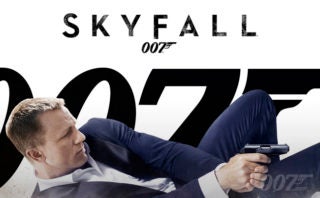
Following the action through both protagonist and antagonist experiences which is effective because the audience will get more from the movie if they see what the effect is on the other person, for example the film Skyfall when James Bond shoots at the bad guy you see the effect that the bullet had on the bad guy. This gives the audience a clearer mind set on what happened to the character because the audience could be constantly “did the bullet hit him?” so therefore they would be able to continue watching the film knowing that they aren’t left in the dark and are up to speed with what’s happening.


Shot variation is the iconic scene uses which have a gradual build-up of the editing pace, along with tighter shot types. For example in the film ‘The good, the bad and the ugly’ the shoot-out scene uses a variety of different shot types for example medium close ups, medium long shots, close ups, long shots, extreme close ups and an over the shoulder shot. All these different shots in one scene can build up tension and the music that we hear gets very loud and tense making the audience think they’re going to shoot any minute now.


Multiple character narratives are when the audience sees different characters reactions and emotions but still have the same narrative plot. An example of this is from the film ‘Magnolia’ when there’re frogs falling from the sky as if it were ‘raining frogs’. This could affect the characters in different ways some could be laughing, and some could be completely terrified. The effect on the audience is to see a different variety of people and how they have affected to it because it could be completely different to how someone else was affected by it.


Manipulation of diegetic space and time is when the audience get to see the impact of each death. For example the film ‘The Matrix’ when the character shoots the bad guy and you see the impact of how hard the bullet hit him which is what made him fall backwards that could affect the audience like as if you were feeling their pain and the impact of how hard the ground is. It is also shown in slow motion as if you were seeing everything happen right before you eyes in close detail since if this was not in slow motion it would have been a lot quicker and the audience would not have had the same affect as the slow motion. 

Film editing is one of the most important parts when creating a film. Film editing has been developing over the years. Editing using film is much longer than video editing due to films nowadays since film used to be cut using scissors and then stuck by using glue. However that is not the case anymore due to having better technology that has changed over the years. 

Video editing is different and better way of editing when creating a film. Video editing is much quicker than film editing but still does that same thing which is showing the story and the characters emotions and actions.

Digital editing is more modern because it is what people nowadays use to edit their footage to create film sequence. This can be done on computers using editing software such as Final Cut Pro etc. It's much easier and much quicker because once the footage has been uploaded the editor just needs drag that footage and place it where they desire and have the ability to edit that footage anyway they would like using that same software for example using transitions, effects, sounds etc. 

Analogue editing is what was used before the modern day technology come about. This was done physically by editors actually using their hands and usually they have a copy of the film where all the footage went when it was being filmed and then to create the cutaways the editor would cut different sections which would then create he cutaways and then all of this is then out into a machine which puts the film together. 


45 Second Scene

45 Second Scene